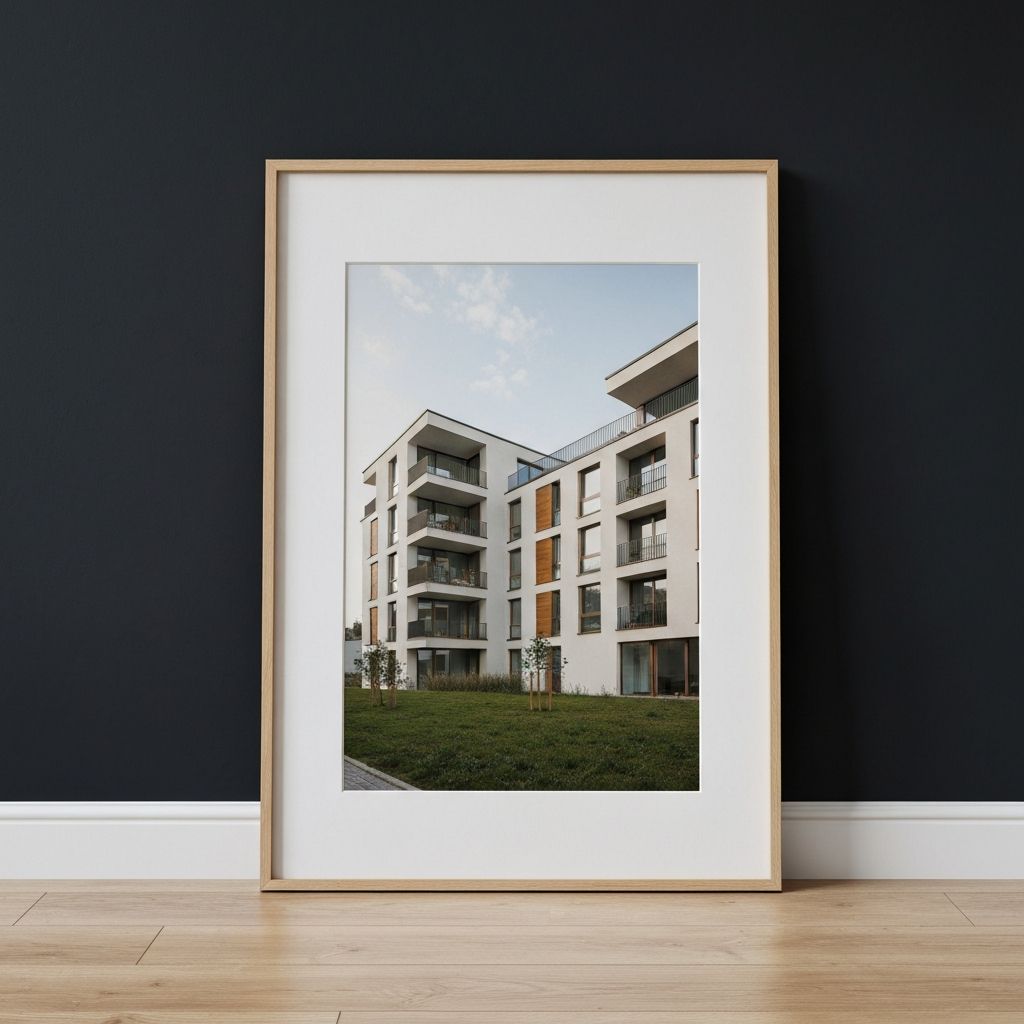
Most people only think about finding a framer when they have something in hand that needs framing. That tends to mean a quick Google search, a few calls, and a decision made on price because there is not much else to go on. This is how good artwork ends up in bad frames.
The difference between a skilled framer and an indifferent one is not always immediately obvious, but it is very obvious ten years later when the mount board has turned yellow and acidic, the canvas has warped, or the UV damage has faded an oil painting that was priceless to its owner. Choosing a framer well is worth the extra few hours it takes.
What to look for
A proper workshop or studio
A dedicated framing workshop has flat-bed cutting equipment, proper glass handling facilities, a good range of moulding samples, and — most importantly — the physical space to handle artwork carefully. Framers working from a small back room or a domestic space may be perfectly skilled, but they are operating under constraints that make damage more likely and quality harder to maintain consistently.
This does not mean you need to visit a large commercial operation. Some of the best framers in the country work from converted railway arches or small studio spaces. What matters is whether the space is organised for the work, not how large it is.
A portfolio you can actually look at
Any framer worth their rates should be able to show you examples of previous work. In person, this means finished pieces in the studio — not just photographs. In photographs, look for corner joins (should be clean and tight), mount cuts (should be straight with no stepped edges), and overall finish (should look deliberate and refined, not approximate).
Pay particular attention to how they have handled corners on paintings and whether the reveal — the gap between the artwork and the frame — is even on all sides. Uneven reveals are a surprisingly common sign of imprecise work.
Someone who asks about your artwork before quoting
A framer who gives you an instant price without asking about the artwork, its value, its condition, or what it will be used for is not thinking carefully about your particular job. Good framers ask questions: Where will this hang? Is there any existing damage? Do you know what the artwork is made on? Is there sentimental or monetary value I should know about?
Questions to ask
You should feel entirely comfortable asking these questions. A good framer will welcome them.
- "What mount board do you use as standard — and is it acid-free?" The answer should be yes for anything that is not a budget job. If they seem uncertain what acid-free means, that tells you something.
- "What glass are you recommending for this piece, and why?" They should be able to explain the difference between standard, UV-filtering, and museum glass and help you choose based on what the piece is and where it will hang.
- "How will you attach the artwork to the mount?" For original work, the answer should involve Japanese tissue hinges or similar reversible methods — never dry mounting or adhesive directly to the artwork.
- "Can I see some recent examples of your work?" This is not rude; it is sensible.
- "How long have you been framing professionally?" Five years of full-time commercial framing is a reasonable baseline. Ten years suggests someone who has handled a lot of variety.
- "What is your turnaround time, and do you offer a guarantee on your work?" Standard turnaround is one to two weeks. A guarantee on the joinery and finishing is a sign of confidence in the work.
Why materials matter more than most people realise
Framing materials have a direct impact on whether artwork survives or deteriorates. This is not a minor consideration — it is the whole point of framing.
Standard mount board contains lignin and acids from wood pulp. Over years, these migrate into the artwork and cause yellowing, staining, and acid burn. You may have seen old framed prints with a brown border where they were in contact with the mount — that is acid damage, and it is irreversible. Conservation mount board is buffered to a neutral pH and will not cause this.
Standard glass blocks a fraction of the UV light that causes fading. Oil paintings are relatively robust, but watercolours, photographs, and works on paper can fade noticeably over a decade without UV-filtering glass, especially in rooms with fluorescent lighting or significant daylight.
These materials cost more. A conservation-grade job costs roughly twice what a standard-grade job does. For a poster, the extra cost is probably not warranted. For an original artwork, a family photograph, or anything irreplaceable, it is not a cost — it is protection.
Red flags
These should make you pause and think carefully before proceeding:
- No portfolio and no willingness to discuss previous work. A framer who cannot show you anything they have made is a framer to be cautious of.
- Quotes dramatically below the market rate. Cheap framing is cheap for a reason — usually compromised materials, rushed work, or both. If a quote is 40% below everyone else's for the same specification, ask why.
- Suggesting dry mounting for original artwork. Dry mounting uses heat and adhesive to permanently bond artwork to a backing. It is irreversible and destroys the artwork's value. Any framer who suggests this for anything other than posters either does not know what they are doing or does not care.
- Reluctance to discuss materials. "We use good quality materials" is not an answer. "We use Crescent Conservation Select for all original work and Tru Vue UV70 glass as standard" is an answer.
- Pressure to make quick decisions. Good framers are busy. They are not going to push you into a decision on the spot. A framer who makes you feel hurried is a framer who does not want you looking too closely.
- Handling your artwork carelessly. If a framer picks up a painting by the canvas rather than the stretcher bar, or tosses a print on a workbench without checking for debris, leave.
Online services vs a local framer
Online framing services have become more sophisticated and can be good value for straightforward prints and photographs. You upload dimensions and specifications, choose from a range of frames and mounts, and the finished piece arrives by post.
The limitations are real, though. You cannot inspect materials before committing. You cannot discuss a tricky piece with someone who can see it. For anything other than simple prints — originals, canvases, fragile or irregularly shaped items, anything valuable — a local framer who can assess your specific piece in person is usually the better choice.
The best outcome is finding a local framer whose work you trust and building a relationship with them over time. Good framers remember your preferences, your collection, and your home — and that context produces better work.
Related articles
How much does picture framing cost in the UK?
A comprehensive guide to picture framing prices in 2026, from budget options to museum-quality conservation framing — plus tips on where to save and where to spend.
Canvas stretching vs canvas printing: what is the difference?
Confused about canvas stretching and canvas printing? We break down what each process actually involves, when to choose one over the other, and what to expect to pay.
Football shirt framing: everything you need to know
A complete guide to framing football shirts and sports memorabilia — from choosing the right display method to protecting signed items and what you should expect to pay.