These two services sound similar and are often advertised side by side, but they are genuinely different processes for genuinely different needs. Getting them confused can lead to either commissioning work that is not what you actually wanted or missing an option that would have served you better.
The short version: canvas stretching is about taking an existing canvas and mounting it properly. Canvas printing is about creating something new from a digital file. But there is more nuance to both than that.
Definitions
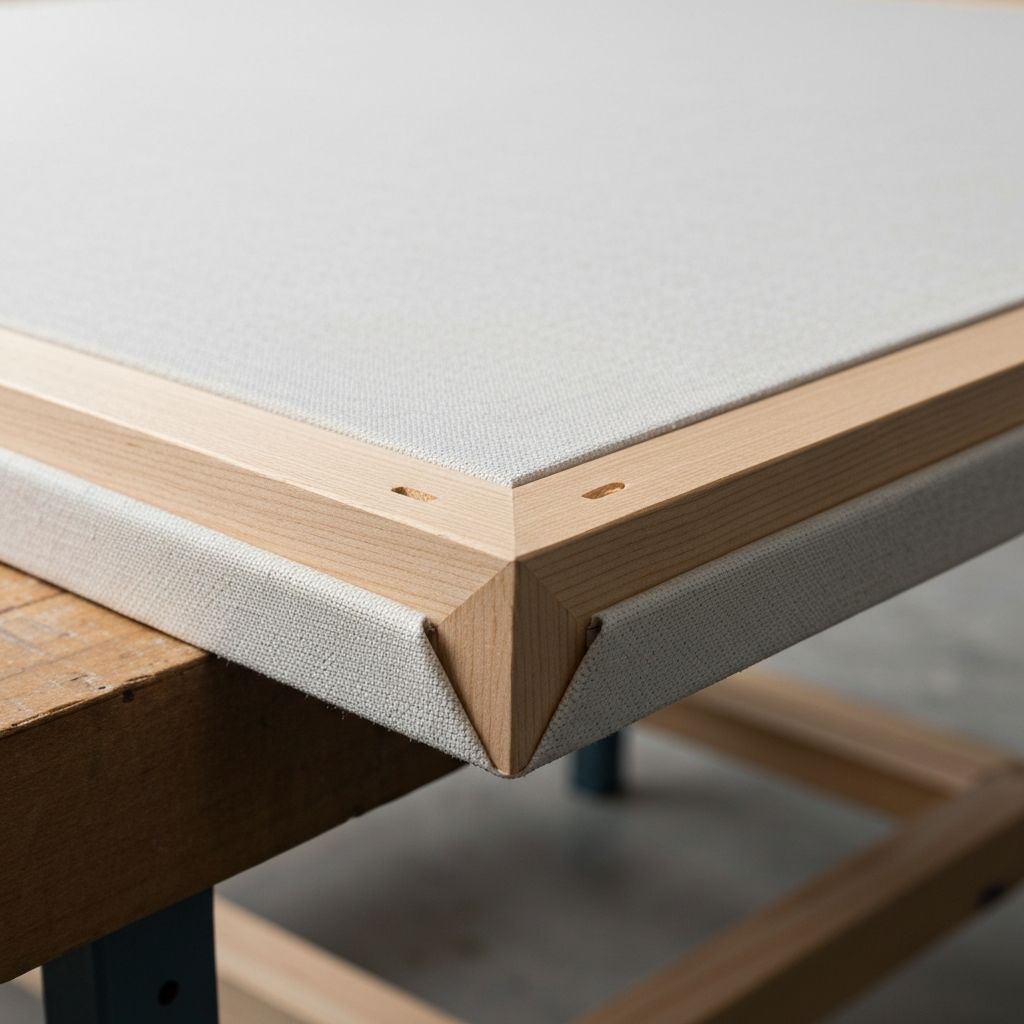
Canvas stretching is the process of taking a canvas — typically a painting or a large-format print on canvas material — and stretching it tautly over a wooden frame called a stretcher bar. The canvas is pulled to even tension on all sides, the corners are folded neatly, and it is stapled (traditionally, tacked) to the back of the bars. The result is a rigid, display-ready piece with clean sides.
Canvas printing is the process of taking a digital image — a photograph, a digital artwork, a scanned painting — and printing it onto canvas-textured polyester or cotton material using a large-format inkjet printer. The printed canvas is then usually stretched onto bars in the same way. What you end up with looks similar to a stretched canvas, but the image itself was created digitally.
When people say they want their photograph "on canvas," they almost always mean canvas printing followed by stretching. When an artist says they need their painting stretched, they mean canvas stretching only.
The stretching process in more detail
Good canvas stretching is more involved than it looks. The stretcher bars themselves matter: cheap stapled bars will warp within a few years; properly braced kiln-dried hardwood bars, with mortise-and-tenon or keyed corners, will last decades without warping.
The tension has to be even — not just tight, but equally tight on all sides. Uneven tension creates distortions that are immediately obvious, especially on large canvases. An experienced stretcher works methodically from the centre outward on each side, checking and adjusting as they go.
The corners are where craft really shows. A properly mitered and folded corner on a canvas has no creases, no excessive bulk, and lies flat against the back of the stretcher. Bad corners crease the canvas, sometimes permanently.
For paintings on canvas that have been rolled for storage or are slackening with age, the stretcher bars may also need keys — small wooden wedges that can be tapped in to increase tension over time as the canvas responds to humidity changes.
When to choose canvas stretching
Canvas stretching is the right choice in these situations:
- You have an original painting on unprimed or unstretched canvas. Artists often work on rolls of canvas and have paintings stretched when they are finished and ready to display or sell.
- Your painting has come loose from its existing stretchers. Canvases lose tension over time, especially with temperature and humidity changes. Re-stretching brings them back.
- You have a rolled or folded canvas and want to frame or display it. Many paintings arrive rolled in tubes from international sales or storage. A skilled stretcher can flatten and mount these.
- You have a printed canvas from an earlier print run that now needs mounting. Canvas prints without stretcher bars are often rolled — they need stretching to display.
- You want to re-stretch a canvas to larger bars to increase the visual weight of a piece, or to smaller bars for a different display situation.
- You need conservation stretching for a valuable or fragile canvas. This is a specialist skill involving careful assessment, possibly linen lining if the canvas is fragile, and archival-quality bars.
When to choose canvas printing
Canvas printing makes sense when:
- You want to display a digital photograph. Whether it is a family portrait, a landscape shot, or a piece of digital art, canvas printing gives it texture and depth that standard photo paper does not.
- You want to reproduce a painting. Artists often have giclée prints made of popular works — printed on canvas, they closely resemble the original.
- You need multiple copies. A digital file can be printed at any quantity; an original cannot.
- You want wall art at a specific size without commissioning a one-off piece. Canvas printing gives you control over dimensions.
- You want a "painted" look for a space but are working to a photography budget rather than an art budget.
Common mistakes
The most frequent mistake is paying for canvas printing when what you actually have is an original painting. If someone brings an oil painting to a print shop, they will be told (hopefully) that they cannot print it — they need a stretcher framer. Equally, some framers who do stretching may not offer printing, so knowing which service you need saves time.
The second common mistake is using cheap stretcher bars for large prints. Canvas prints are often large — a 120×80cm print looks beautiful, but stretched on 18mm thin pine bars it will warp within a year. Hardwood bars with cross-bracing are essential above about 80cm on the longest dimension.
The third mistake is choosing a low-resolution image for printing. Canvas printing makes pixelation very visible. For a 60×40cm canvas print, you need at minimum 1800×1200 pixels from the source file; for larger sizes, significantly more. If your image is from a phone photograph taken several years ago, check the file size before ordering a large print.
Cost comparison
Canvas stretching (mounting an existing canvas onto bars) typically costs £40–£150 depending on size. A 60×40cm piece might cost £45–£65; a 120×90cm piece £80–£120. Conservation stretching for valuable or fragile work is priced individually and can be considerably more.
Canvas printing covers the cost of both the print production and usually the stretching. A 40×30cm canvas print starts around £25–£40 from a trade print shop, but quality giclée printing on proper cotton canvas with professional stretching starts around £80–£120 for the same size and can reach £300–£500+ for large-format fine art reproduction prints from a specialist studio.
As a rule of thumb: for originals and works you care about, the cost of stretching is a minor consideration compared to doing it well. For reproduction and decorative printing, shop around but prioritise material quality over the cheapest quote.
Related articles
How much does picture framing cost in the UK?
A comprehensive guide to picture framing prices in 2026, from budget options to museum-quality conservation framing — plus tips on where to save and where to spend.
How to find a trusted picture framer near you
What to look for in a professional framer, the questions that separate good craftspeople from bad ones, and the red flags that should make you walk away.
Football shirt framing: everything you need to know
A complete guide to framing football shirts and sports memorabilia — from choosing the right display method to protecting signed items and what you should expect to pay.